A Basket Built for Two: Farm Shop Shopping Without the Waste
Farm shop shelves are not usually built for one or two. A cabbage the size of a football, a bag of carrots that could feed a Sunday lunch, a wedge of cheese that will outlast the month — it is easy to see why smaller households sometimes feel local food is not aimed at them. But the answer is not to give up on the farm shop. It is to shop it a little more deliberately.
The trick is not buying less for the sake of it. It is buying ingredients that can move between meals, asking for smaller cuts where possible, and dealing with portions before they become a guilt-laden lump at the back of the fridge.
Buy for more than one meal
Flexible ingredients are the whole game. A leek can go into soup, a frittata, a toastie or a tray of roast vegetables. A small bunch of kale can be wilted under a roast, stirred through pasta or tucked into a cheese sandwich. Potatoes, onions, carrots and squash all earn their place because they turn up in several dishes without complaining.
Think in pairs and trios rather than single recipes. If you buy mushrooms, plan a second use for them: on toast, in an omelette, or stirred into a lentil dish. If you buy a small roast, think about the cold meat that follows. That is not batch cooking in the Instagram sense. It is just giving tomorrow a head start.
The small-household basket
Here is a realistic weekly basket for one or two, not a rigid shopping list:
- one small loaf or half a bloomer
- six eggs
- 200–250g cheese, cut from the counter
- two sausages or a small joint, depending on the week
- a few potatoes, carrots and onions
- one leafy green, such as kale or spinach
- mushrooms or leeks
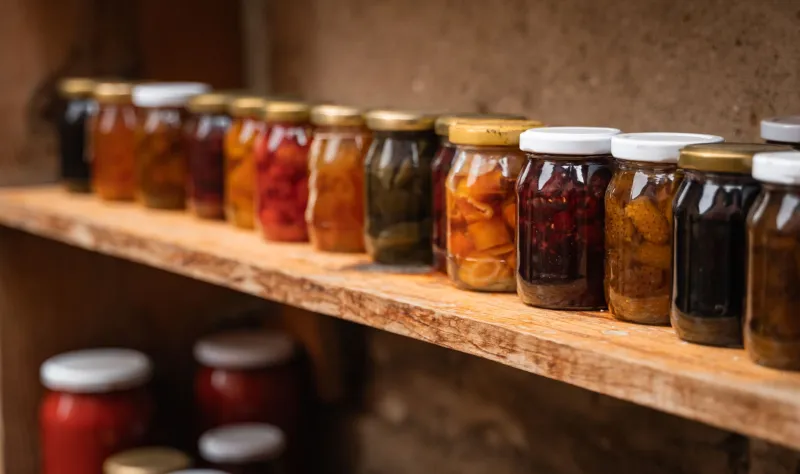
- a jar of chutney or pickle
- milk or yoghurt if you use it
That is enough for several meals if you plan two or three flexible recipes. It is not the cheapest possible shop, but it is a sensible one. The point is to leave the shop with a week that hangs together, rather than a collection of bargains that do not quite make a dinner.
Ask at the counter
Farm shops have an advantage supermarkets do not: a person who knows the stock. Ask whether a cheese can be cut smaller. Ask if the sausages can be split into twos. Ask which greens will still be good on Thursday. Ask whether a particular cut freezes well. These are not awkward questions. They are the reason to shop there.
If you are buying meat, say you are cooking for one or two. A good counter will steer you towards a smaller joint, a couple of chops or a cut that slices well cold. If you are buying bread, ask when it was baked and whether it freezes well. If you are buying vegetables, ask what is at its best rather than what is simply on display.
Portion before you put it away
The doorstep is where good intentions often fade. Before everything goes into the fridge, split it. Divide mince or sausages into meal-sized portions. Cut cheese into a wedge for now and a wedge for later. Slice and freeze bread if you will not get through it. Put the most perishable things on a use-first shelf, and label anything you freeze.
A marker pen and a few freezer bags are not glamorous, but they are useful. A portion of soup, a couple of sausages, a slice or two of roast — these are the makings of a future supper. They are also far easier to use when you can see what they are.
A loose meal plan for two
Monday: leek and potato soup with the last of the bread. Tuesday: sausages with mash and greens. Wednesday: roasted squash or roots with a little cheese grated over the top. Thursday: frittata using leftover vegetables and cheese ends. Friday: toastie night, with chutney and whatever green is left. The weekend can be a small roast or a simple pasta, with leftovers folded into Monday.
That is not a strict plan. It is a shape. It gives you permission to cook once and eat twice without feeling like you are eating the same dinner for days.
Repurpose on purpose
Leftovers become second suppers. Cold roast meat can go into a toastie, a hash or a soup. Cheese ends can be grated into sauce or saved for the toastie plate. Stale bread becomes crumbs, croutons or the base of a winter pudding. Wilting greens can be blanched and frozen, or chopped into a frittata. A lonely carrot or half an onion can join a soup pot rather than the bin.
The phrase leftovers can sound like a consolation prize. Second suppers sound better because that is what they are: dinner, again, with less effort.
The waste check
Before you shop, look at what is already in the fridge. Buy one or two project ingredients — the things you are excited to cook — and keep the rest practical. A jar of chutney is worth having because it makes plain cheese and bread feel like a proper meal. Herbs are worth buying only if you have a plan for them.
And if something does go over, learn from it rather than turning it into a moral failing. Was the pack too big? Did you buy it for a recipe you never cooked? The next shop can be smaller and better judged.
Local food is not only for big families with chest freezers and a weekly roast to feed eight. It is for anyone who wants to eat well and shop with a bit more connection. For one or two, that just means a little more thought at the counter and a little less food going soft in the drawer.