Jarring Ambition: Turning Late-Autumn Fruit into Winter Luxuries
There is a particular kind of satisfaction that comes from a kitchen full of simmering fruit. It is not glamorous. It is not fast. But when the late-autumn glut arrives — apples by the bag, pears softening on the shelf, quinces filling the room with their strange perfume — preserving is the most sensible and most pleasurable response.
This is not a Christmas article. It is about the quieter art of turning a glut into everyday luxuries: jam for toast, curd for yoghurt, fruit vinegar for salads and chutney for cheese. These are the jars that make a winter kitchen feel well stocked, and they are far thriftier than buying small-batch preserves at a farmers’ market.
Why Late-Autumn Fruit Preserves So Well
Apples, pears and quinces are high in pectin and acid, which is exactly what you need for a set. They also have a natural affinity with sugar and spice, so a single pan can produce something that tastes far more expensive than the sum of its parts.
Windfalls are fine for preserving, provided you cut away bruises and soft spots. In fact, preserving is one of the best uses for fruit that is too blemished to sell as eating fruit. Ask at the farm shop counter whether they have a box of seconds or cooking apples available — often they do, and the price reflects it.
Quinces are the luxury ingredient in this trio. They are hard, pale and unpromising raw, but they turn pink and fragrant after long cooking. Pears bring sweetness and a softer set. Apples bring structure and sharpness. Use them together or separately; the principles are the same.
The Farm Shop Shopping List
You do not need much beyond the fruit. A few extras will make the whole enterprise easier:
- A bag of cooking apples, a box of pears and a couple of quinces
- Preserving sugar, which has larger crystals and helps a clear set
- Lemons for juice and zest
- Cider vinegar or white wine vinegar for fruit vinegars and chutneys
- Whole spices: cinnamon, cloves, star anise, black peppercorns
- A few clean jars with lids
- Muslin or a fine sieve for straining
If you want to make curd, you will also need eggs and butter. If you want a softer, more honeyed preserve, a jar of local honey is a lovely addition. But the core shopping list is small, and most of it will keep for the next batch.
Jam: The Straightforward Win
Jam is the most obvious thing to make, and the most rewarding. The basic ratio is simple: about 750g of sugar for every kilo of prepared fruit, plus the juice of a lemon. Cook the fruit gently first until it softens, then add the sugar and boil hard until it reaches a set.
For apple and quince jam, peel and core the apples, chop the quinces roughly and simmer them with a little water until tender. Add sugar and lemon juice, then boil until a spoonful wrinkles when you push it across a cold plate. Pot it hot into sterilised jars.
Pear jam is softer and sweeter. Add a little lemon zest and a vanilla pod if you have one. It is excellent on toast, but also very good spooned over porridge or stirred into yoghurt.
Curd: Softer, Faster, Fridge Only
Fruit curd is a different pleasure. It is creamy, sharp and quick to make. Quince curd is a revelation — pale pink, gently perfumed and lovely with scones or sponge. Pear curd is sweeter and milder.
The method is gentle: whisk eggs, sugar, butter and fruit purée together in a bowl over a pan of simmering water. Stir constantly until the mixture thickens enough to coat the back of a spoon. Do not let it scramble. Pour into jars and keep it in the fridge; it will last a few weeks.
Curd is not a long-term preserve in the same way as jam, but it is a wonderful way to use a small amount of fruit. It also makes a generous gift, especially if you tie a little ribbon around the jar.
Fruit Vinegar: The Slow Infusion
Fruit vinegar is the quiet overachiever of the preserving world. It takes almost no effort and gives you something you will use all winter.
Fill a jar with chopped apple and pear pieces — skins, cores and all, as long as they are clean. Cover with cider vinegar, seal and leave in a cool cupboard for two to four weeks. Strain, bottle and sweeten lightly if you like. The result is a sharp, fruity vinegar that makes a brilliant salad dressing, a bright splash for roasted vegetables or the base of a winter shrub.
Quince vinegar is particularly good. It has a floral note that works well with bitter leaves and hard cheese. Make a small batch first; it is easy to scale up next autumn.
Chutney: The Long Game
Chutney is where the glut really earns its keep. Apples, pears and quinces all make excellent chutney, especially with onions, raisins, ginger and a little chilli.
Cook everything down slowly until the mixture is thick and glossy, then pot it into jars and leave it alone for at least a month. Chutney improves with time, so make it now and eat it through the winter. It is the kind of thing that makes a plain cheese sandwich feel like a proper lunch, and it is far cheaper than the small jars on the deli shelf.
Jars, Labels and the Gift That Isn’t Christmas
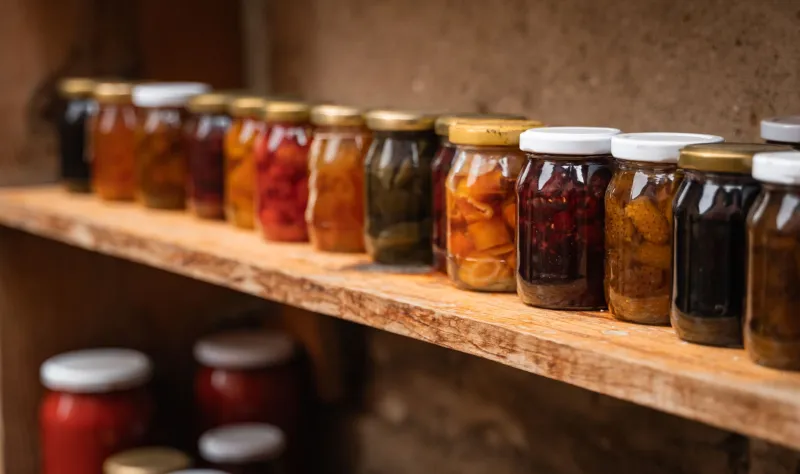
There is a particular pleasure in a shelf of homemade jars. They are not just food; they are evidence of a weekend well spent. A handwritten label, a square of fabric over the lid and a piece of string turn a jar of apple chutney into a gift that feels personal and useful.
But this is not about saving everything for December. A jar of quince curd given in November, or a bottle of pear vinegar taken to a friend’s supper, is a gift that belongs to the season rather than the calendar. It says you noticed the glut and did something with it.
Stretching the Season
Preserving is thrift, but it is also a way of eating locally for longer. A jar of jam on a January morning is a reminder of October. A spoonful of chutney with a winter cheese plate is autumn fruit doing useful work. A splash of fruit vinegar wakes up a cold-weather salad.
So when the boxes of apples and pears start to pile up, do not panic. Buy a few extra jars, set aside an afternoon and make a batch of something. The kitchen will smell extraordinary, the shelves will look better and the winter will taste a little more like the farm shop.