The Counter Conversation: Choosing a Sunday Roast Cut by Cut
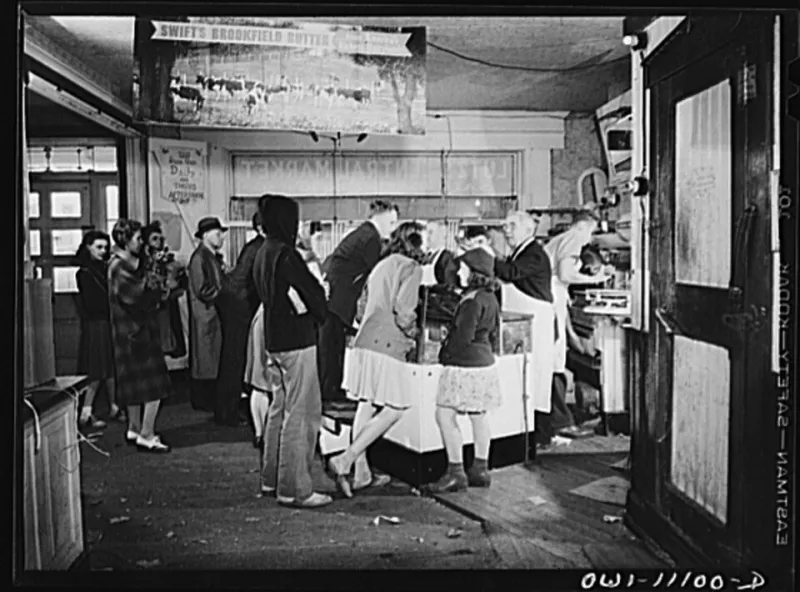
Photo: Marjory Collins, Public domain, via Wikimedia Commons
There is a moment, usually on a Saturday morning, when a Sunday roast is won or lost. It is not the moment you slide the tin into the oven. It is the moment you stand at the meat counter and decide what to buy. Supermarket packs are tidy, uniform and quietly uninformative. A farm shop counter is the opposite: the meat has a story, the butcher has an opinion, and you are allowed to ask questions.
That is not a small thing. Buying direct gives you a cut trimmed to your needs, bones for gravy, fat for flavour and a relationship that makes next week’s roast easier. It also turns the Sunday roast from an occasional treat into a weekly ritual of local sourcing — one that costs less than you might think if you choose the right cuts.
Start With the Right Questions
You do not need to sound like a butcher to get a good answer. A few straightforward questions will do most of the work:
- What breed is this, and how has it been reared?
- Has it been hung, and for how long?
- Is it bone-in or boneless, and what difference will that make?
- How much fat cover does it have?
- How many people will this piece feed once cooked?
- What would you put on your own table this Sunday?
That last question is often the most useful. Butchers know which joints are eating well right now, which cuts are underrated and which pieces are better suited to slow cooking than a hot oven. Ask for the weight you need rather than accepting a fixed pack size. Ask for the bones, too — they make gravy that no stock cube can match.
Beef: From Fore Rib to Brisket
Beef is where the Sunday roast becomes a proper occasion, but it is also where the widest range of prices and results lives.
Fore rib, bone-in is the classic showpiece. It has marbling, a good cap of fat and a deep, beefy flavour. It is not cheap, but it is forgiving if you roast it gently and rest it properly. Ask for the chine bone removed or loosened so carving is easier.
Sirloin is leaner and neater. It carves beautifully and suits a family that likes pink meat without too much fat. It can dry out if overcooked, so treat it kindly.
Topside and silverside are the value cuts. They are lean, so they need basting, a low oven and a good rest. Ask the butcher to tie it evenly and consider larding it if you want extra richness. Served with proper gravy, it is a very sensible weekly roast.
Brisket and chuck are not traditional hot-roast cuts in the same way, but they are superb for slow roasting. Brisket, in particular, becomes tender and sticky after a few hours. It is also one of the best-value pieces on the counter. If you want a Sunday roast that stretches into Monday, start here.
Lamb: Leg, Shoulder and Best End
Lamb is at its best in the cooler months, and the counter usually has more choice than the supermarket chiller.
Leg is the quick roast. Ask for it bone-in if you can — the bone conducts heat, adds flavour and makes the gravy better. Roast it fairly hot, keep it pink and rest it well.
Shoulder is the forgiving cut. It is fattier, cheaper and happier with a long, slow roast. Ask for it bone-in and scored, then cook it until it pulls away from the bone. It is almost impossible to ruin.
Best end of neck — often sold as a rack — is the special-occasion cut. It is neat, tender and quick to cook. Ask the butcher to French-trim the bones if you want it to look smart on the table.
Loin sits somewhere between the two: lean, tender and easy to carve. It is a good choice if you want lamb without the fuss of a shoulder.
Pork: Loin, Shoulder, Belly and Leg
Pork is often overlooked on the roast front, which is a shame. A good farm-shop pork joint has more flavour than most supermarket equivalents, largely because of the fat and the rearing.
Loin is the everyday roast. Ask for the rind scored and the chine bone removed. Keep an eye on it — pork loin is lean and dries out quickly. Pull it out at around 65–70°C and rest it.
Shoulder is the slow-roast hero. Bone-in, skin-on shoulder cooked low and slow gives you tender meat and proper crackling. It is also excellent value per portion.
Belly is rich and forgiving. Ask for it scored and roasted slowly until the fat renders and the skin crackles. It is not a neat carving joint, but it is a delicious one.
Leg is the traditional Sunday roast, especially for a crowd. Ask for it boned and rolled, or bone-in if you want to carve at the table.
Why the Counter Beats the Chiller Cabinet
A supermarket pack is designed for shelf life and uniformity. A farm shop counter is designed for eating. That difference shows up in flavour, texture and value.
Buying direct means you can ask for a piece that suits your oven, your carving skills and your number of guests. You can buy bone-in for flavour or boneless for ease. You can ask for the fat to be left on. You can get bones for gravy and trimming for the dog. You are not paying for plastic, padding or a fixed weight that is slightly too big for your family.
Value is not always about the lowest price per kilo. It is about how many good meals you get from a piece of meat. A shoulder of lamb or a brisket may cost less than a rib roast, but it feeds more people, leftovers better and makes a better gravy. That is the kind of arithmetic a butcher understands.
A Weekly Ritual, Not a Treat
The Sunday roast does not have to be a once-a-month splurge. If you buy the right cut, it can be a weekly habit that supports local farms and costs less than a takeaway.
Plan on Friday, order or collect on Saturday, and roast on Sunday. Ask for a piece that suits your budget. Stretch the leftovers into Monday sandwiches, Tuesday hash or a midweek pie. Freeze the bones if you do not have time to make stock straight away.
And talk to the person behind the counter. They are not there to sell you the most expensive joint. They are there to help you cook something worth sitting down for. That conversation is part of the meal — and it is one of the quiet pleasures of shopping locally.