Stems, Scraps and Slow Cuts: The Quiet Economics of Using the Whole Shop
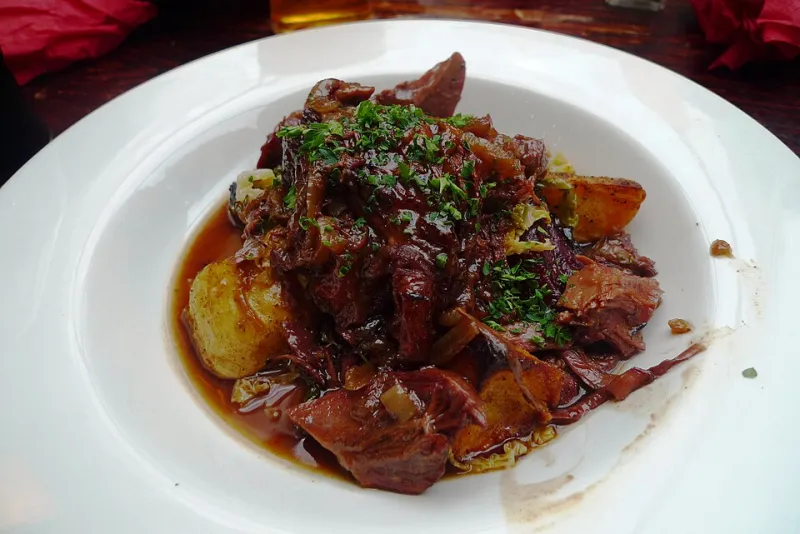
Photo: Ewan Munro from London, UK, CC BY-SA 2.0, via Wikimedia Commons
Every farm shop has a corner of awkward bits. The chard with thick stems that look like a separate vegetable. The carrots with a wig of green tops. The beef shin that the butcher recommends but you are not quite sure how to cook. The bacon with its rind still on. The end of the loaf that nobody fights over. The squash seeds scraped into the bin without a second thought. These are not scraps. They are the part of the shop that most people pay for and then leave behind.
Buying whole and using whole is the quiet economy of farm shop shopping. It is not a discount scheme. It is a way of stretching a weekly budget by getting more meals out of the same bag. If you buy a bunch of chard and use only the leaves, you have paid for the stems and thrown them away. If you buy a whole beef shin and turn it into a slow braise, you have bought several dinners and a pot of stock for less than the price of a prime cut. The awkward bits are where the value hides.
Chard stems: the crunch you already paid for
Chard is a November staple for a reason. It keeps going when softer leaves have given up, and it gives you two vegetables in one bunch. The leaves wilt in minutes. The stems need a little more time, but they are sweet and celery-ish, not tough and pointless. Slice them into short batons, soften them in olive oil with garlic and a pinch of chilli, then add the shredded leaves at the end. Toss the lot through pasta with a squeeze of lemon and a spoonful of the pasta water. If you have a bit of blue cheese or a handful of walnuts, so much the better. The stems add texture and substance; the leaves add colour. Nothing is wasted, and the dish tastes like it was designed rather than assembled.
Carrot tops: the herb you have already bought
Carrot tops are not just compost. The tender ones make a punchy pesto or salsa verde. Wash them well, blanch them for 30 seconds if you want a softer flavour, then squeeze dry. Blitz with garlic, toasted seeds, a little lemon zest and enough olive oil to loosen. Season and taste. It will keep in the fridge for a week or freeze in ice-cube trays. Spoon it over roast carrots, stir it into soup, or use it as a dressing for warm potatoes. If the tops are very feathery and soft, you can chop them raw into a salad. If they are coarse, blanch them first. Either way, you have turned a throwaway into a condiment.
Beef shin: the braise that gives back
Beef shin is one of the great farm shop bargains. It is tough if you rush it and magnificent if you do not. Ask the butcher to bone and tie it, or buy it cut into thick rounds. Brown the pieces hard in a heavy pan, then set them aside. Soften onions, carrots and celery in the same pan, add a spoonful of tomato purée, a bottle of ale or a glass of red, the beef, a bay leaf and enough stock to come halfway up. Lid on, low oven, three hours or so, until the meat falls apart and the sauce is glossy. Shred the meat back into the sauce and serve with mash or jacket potatoes. The leftovers are even better the next day. This is not a cheap cut because it is inferior. It is cheap because it asks for time.
Bacon rind: flavour, not a chew toy
Bacon rind is brilliant for building flavour. If you have a piece of rind-on bacon, cut the rind off before cooking and add it to the pot when you are making soup, beans or greens. It will give a savoury depth that no stock cube can match. Fish it out before serving. If the rind is thin and crispable, fry it separately until it crackles, then crumble it over a baked potato. Do not just leave it on the side of the plate. It has paid its way.
Stale loaf ends: the breadcrumb larder
Keep a bag in the freezer for loaf ends. When you have a few, blitz them into crumbs. Toast the crumbs in a dry pan with olive oil, garlic and herbs, and you have a crunchy topping for pasta, roasted cauliflower or a winter gratin. Soak stale bread in milk and use it for meatballs or stuffing. Tear it into a soup with beans and greens and call it ribollita. The point is not to make a virtue of stale bread. The point is that bread is too good to bin, and crumbs are a pantry ingredient that costs nothing.
Squash seeds: roast them and stop buying snacks
Scoop the seeds out of your squash, rinse off the stringy bits, toss with a little oil and salt and roast at 160C fan for 15 to 20 minutes, until they are crisp and golden. Add cumin, smoked paprika or chilli flakes if you like. They are a snack, a salad topping and a garnish for soup. This is the most obvious awkward bit of all, and the one most people still throw away.
The quiet economy of whole shopping
The argument is not that you should eat every scrap out of duty. It is that the awkward bits are often the best-value parts of the shop. A whole chard is two vegetables. A beef shin is a braise and a stock. Carrot tops are a herb. Bacon rind is a flavour base. Stale bread is a topping. Squash seeds are a snack. None of this requires a discount code or a special offer. It requires a bit of knife work and the willingness to look at a stem and think about dinner.
That is the quiet economy of farm shop shopping. You buy well, you use well, and the weekly budget stretches further than it looks. The awkward bits are not the leftovers. They are the point.